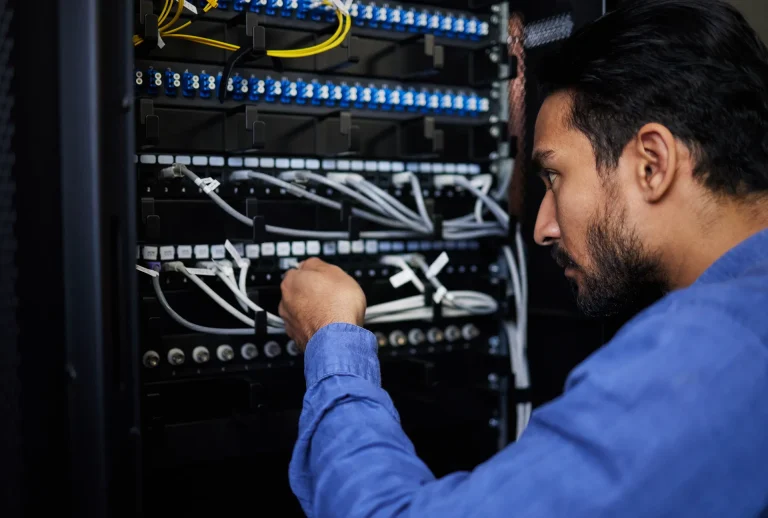
Continuous security monitoring means your systems are watched around the clock for signs of trouble, with alerts reviewed and acted on as they happen. It replaces the older model of checking security once a quarter or once a year and hoping nothing slipped through in between.
For small and mid-sized businesses across Central Florida, that shift matters. Attackers do not wait for your next scheduled review, and the longer a threat goes unnoticed, the more it costs to clean up.
Why Periodic Security Checks Fall Short
A quarterly vulnerability scan or an annual assessment still has value. It tells you where you stood on the day the check ran. The problem is everything that happens after that day.
New devices join the network. Employees click links. Software vendors release patches, and attackers start targeting the flaws those patches fix, sometimes within days. A point-in-time check cannot see any of this.
The cost of that blind spot is measurable. According to IBM’s Cost of a Data Breach 2026 findings, organizations took an average of 247 days to identify and contain a breach. That is roughly eight months in which an attacker may be moving through systems, copying data, or preparing ransomware.
What Continuous Security Monitoring Includes
The National Institute of Standards and Technology describes continuous monitoring in NIST SP 800-137 as keeping ongoing awareness of security, vulnerabilities, and threats so leaders can make informed risk decisions. For an SMB, a well-run continuous security monitoring program usually covers several layers:
- Endpoint activity. Laptops, desktops, and servers are watched for unusual behavior, such as a process trying to encrypt files or switch off security tools.
- Identity and access. Sign-ins are reviewed for red flags like logins from unexpected countries or repeated failed attempts.
- Email and cloud applications. Microsoft 365 and other cloud tools are checked for suspicious forwarding rules, risky app permissions, and phishing that gets past filters.
- Network traffic. Firewalls and network devices supply data that can reveal a compromised machine talking to a known malicious server.
- Vulnerabilities and patch status. Systems are checked on an ongoing basis for missing updates and misconfigurations.
- Dark web exposure. Company credentials that show up for sale are flagged so passwords can be reset before they are used.
Each layer on its own produces a narrow view. Together, they create the cyber visibility needed to connect small warning signs into a clear picture.
Monitoring Only Works If Someone Responds
Security tools generate alerts, and lots of them. Without trained people reviewing those alerts, SMB cybersecurity monitoring turns into noise that nobody has time to read.
This is where SOC services come in. A security operations center (SOC) is a team that watches alerts, investigates what matters, and takes action when a threat is real. Large enterprises often build their own. Most SMBs cannot justify the cost of staffing one around the clock.
Managed detection and response (MDR) and endpoint detection and response (EDR) help close that gap. EDR watches each device and can isolate one that is behaving badly. MDR adds human analysts who investigate threats and guide the response. Combined, they give smaller organizations a level of risk detection that used to be out of reach.

What Threat Detection for SMBs Looks Like Day to Day
Most of the time, good monitoring is quiet. When it does speak up, it tends to catch events like these:
- A user’s password is stolen in a phishing attack, and a login attempt arrives from overseas. The session is blocked and the account is locked for review.
- A workstation begins encrypting shared files at 2 a.m. EDR isolates the machine from the network before the damage spreads.
- An older server is missing a critical patch that attackers are known to target. It is flagged and scheduled for an update.
- A former employee’s account is still active in Microsoft 365. The gap is reported and closed.
That is what practical threat detection for SMBs looks like. None of these events would show up in an annual assessment until long after the fact.
How Managed Security Services Fit Together
Continuous security monitoring works best as one part of a layered plan rather than a standalone product. Alltek’s cybersecurity services are structured around the NIST framework of identify, protect, detect, respond, and recover. Monitoring sits in the detect function, but it depends on the other four to be effective.
That means pairing IT security monitoring with multi-factor authentication, conditional access, advanced spam filtering, encryption, backups, and security awareness training. Well-run managed security services tie these pieces together, and strong MSP security operations make sure a single alert can be traced to its cause and fixed at the source.
Under the Alltimate Advantage, Security is one of four pillars alongside Users, Systems, and Cloud. Alltek’s managed IT services include 24/7 system monitoring, so security oversight and day-to-day system health are handled by a team that knows your environment.
Signs Your Business Needs Continuous Monitoring
- You rely on antivirus and a firewall, but no one reviews alerts after hours
- Your cyber insurance application asks about EDR, MDR, or 24/7 monitoring
- You handle financial, health, or customer data that would be costly to lose
- Your team works remotely or across multiple locations
- You could not say today whether any account in your company has been compromised
If more than one of these applies, a stronger cyber defense posture belongs on your list. Alltek works with small and medium businesses throughout Central Florida that are in exactly this position.
Frequently Asked Questions
See Where Your Security Stands Today
Continuous security monitoring gives you something periodic checks cannot: a current, accurate view of risk every day of the year. Contact Alltek Services to schedule a complimentary cybersecurity review and find out which gaps in your monitoring should be addressed first.